
Psilocybin Treatment for Major Depression, Effective for Up to a Year for Most Patients.

Previous studies by Johns Hopkins Medicine researchers showed that psychedelic treatment with psilocybin relieved major depressive disorder symptoms in adults for up to a month. Now, in a follow-up study of those participants, the researchers report that the substantial antidepressant effects of psilocybin-assisted therapy, given with supportive psychotherapy, may last at least a year for some patients. A report on the new study was published on Feb. 15, 2022 in the Journal of Psychopharmacology. “Our findings add to evidence that, under carefully controlled conditions, this is a promising therapeutic approach that can lead to significant and durable improvements in depression,” says Natalie Gukasyan, M.D., assistant professor of psychiatry and behavioral sciences at the Johns Hopkins University School of Medicine. She cautions, however, that “the results we see are in a research setting and require quite a lot of preparation and structured support from trained clinicians and therapists, and people should not attempt to try it on their own.” Over the last 20 years, there has been a growing of research with classic psychedelics — the pharmacological class of compounds that include psilocybin, an ingredient found in so-called magic mushrooms. According to the National Institute on Drug Abuse, psilocybin can produce perceptual changes, altering a person’s awareness of their surroundings and of their thoughts and feelings. Treatment with psilocybin has shown promise in research settings for treating a range of mental health disorders and addictions. For this study, the researchers recruited 27 participants with a long-term history of depression, most of whom had been experiencing depressive symptoms for approximately two years before recruitment. The average age of participants was 40, 19 were women, and 25 identified as white, one as African American and one as Asian. Eighty-eight percent of the participants had previously been treated with standard antidepressant medications, and 58% reported using antidepressants in their current depressive episodes. After screening, participants were randomized into one of two groups in which they received the intervention either immediately, or after an eight-week waiting period. At the time of treatment, all participants were provided with six to eight hours of preparatory meetings with two treatment facilitators. Following preparation, participants received two doses of psilocybin, given approximately two weeks apart between August 2017 and April 2019 at the Behavioral Biology Research Center at Johns Hopkins Bayview Medical Center. Participants returned for follow-up one day and one week after each session, and then at one, three, six and 12 months following the second session; 24 participants completed both psilocybin sessions and all follow-up assessment visits. The researchers reported that psilocybin treatment in both groups produced large decreases in depression, and that depression severity remained low one, three, six and 12 months after treatment. Depressive symptoms were measured before and after treatment using the GRID-Hamilton Depression Rating Scale, a standard depression assessment tool, in which a score of 24 or more indicates severe depression, 17–23 moderate depression, 8–16 mild depression and 7 or less no depression. For most participants, scores for the overall treatment decreased from 22.8 at pretreatment to 8.7 at one week, 8.9 at four weeks, 9.3 at three months, 7 at six months and 7.7 at 12 months after treatment. Participants had stable rates of response to the treatment and remission of symptoms throughout the follow-up period, with 75% response and 58% remission at 12 months.“Psilocybin not only produces significant and immediate effects, it also has a long duration, which suggests that it may be a uniquely useful new treatment for depression,” says Roland Griffiths, Ph.D., the Oliver Lee McCabe III, Ph.D., Professor in the Neuropsychopharmacology of Consciousness at the Johns Hopkins University School of Medicine, and founding director of the Johns Hopkins Center for Psychedelic and Consciousness Research. “Compared to standard antidepressants, which must be taken for long stretches of time, psilocybin has the potential to enduringly relieve the symptoms of depression with one or two treatments.” The researchers emphasize that further research is needed to explore the possibility that the efficacy of psilocybin treatment may be substantially longer than 12 months. Johns Hopkins is one of the sites of a national multisite randomized, placebo-controlled trial of psilocybin for major depressive disorder. Other researchers who contributed to the study are Alan Davis, Frederick Barrett, Mary Cosimano, Nathan Sepeda and Matthew Johnson from the Johns Hopkins University School of Medicine. The study was funded in part by a crowdsourced campaign organized by Tim Ferriss and by grants from the Riverstyx Foundation and Dave Morin. Support for Alan Davis and Natalie Gukasyan was provided by a grant from the National Institutes of Health (T32DA07209, National Institute on Drug Abuse). Support for authors was also provided by the Center for Psychedelic and Consciousness Research, which is funded by the Steven and Alexandra Cohen Foundation, Tim Ferriss, Matt Mullenweg, Craig Nerenberg and Blake Mycoskie. The funders had no role in study design, data collection and analysis, or in decision to publish or manuscript preparation. COI: Alan Davis is a board member of Source Research Foundation. Matthew Johnson has received grant support from the Heffter Research Institute that is unrelated to this study, and he is an advisor to the following companies: AJNA Labs, AWAKN Life Sciences, Beckley Psytech, Entheon Biomedical, Field Trip Psychedelics, Mind Medicine, Otsuka Pharmaceutical Development & Commercialization and Silo Pharma. Roland Griffiths is a board member of the Heffter Research Institute and has received grant support from the institute unrelated to this study. Griffiths is site principal investigator, and Johnson and Gukasyan are co-investigators for a multisite trial of psilocybin-assisted therapy for major depressive disorder sponsored by Usona Institute.
What to know about Psychedelic Therapy?

Psychedelic therapy is the use of plants and compounds that can induce hallucinations to treat mental health diagnoses, such as depression and post-traumatic stress disorder (PTSD). Some of the compounds that doctors most frequently use in this form of treatment include psilocybin mushrooms, LSD, and mescaline (peyote). The formal study of psychedelics to treat mental health conditions is relatively new, but emerging research suggests that these psychedelics may help some people with some symptoms, especially when other methods of treatment have failed. Researchers do not know exactly how or why psychedelics work in this manner. They may “reset” the brain by altering neurotransmitter levels, induce a new perspective on life by causing a person to have a mystical experienceTrusted Source, or teach a person a new way of thinking. Some research also suggests these psychedelics increase suggestibility, making a person more open to ideas discussed in therapy. Keep reading to learn more about psychedelic therapy, including more about the conditions it may benefit, the types of treatment, and how it may work. What is it? 24K-Production/Getty Images Psychedelic therapy uses psychedelic plant compounds that can induce hallucinations, such as LSD and psilocybin from “magic” mushrooms, to treat mental health issues. Sometimes doctors prescribe this treatment on its own. Often, though, they combine it with other treatments, such as therapy or other forms of support. The goal of psychedelic therapy is to increase the success of traditional treatments. In many cases, doctors try this form of therapy on people whose symptoms have not responded well to standard medications or therapies. How does it work? Traditional medications for mental health conditions often take several weeks to work, or may only work for as long as a person takes them. Most research on psychedelic therapy, by contrast, has found an immediate improvement, often with a single dose. Researchers do not know exactly how psychedelics work, and these drugs do not work for everyone. Some potential ways they might work include: Mystical or psychedelic experiences: Intensely meaningful experiences under the influence of psychedelics may shift a person’s mindset or belief system, causing them to think or behave differently. Increased suggestibility: People using psychedelics may be more suggestible. This can make them more responsive to positive suggestions from a therapist, or to the benefits of their own hallucinations. Neurotransmitter changes: Neurotransmitters are chemical messengers in the brain. Many mental health drugs act directly on neurotransmitters to change mood. Certain psychedelic drugs also may act on neurotransmitters, changing the brain’s behavior and improving mood. Types Doctors can use many different drugs in psychedelic therapy, though most recent research has looked at psilocybin, a substance found in psychedelic mushrooms. Learn more about psilocybin here. Some other drug options includeTrusted Source: LSD: A chemical found in several plants DMT: A chemical available in some plants MDMA: Found in the sassafras tree, and known for its role in the drug Ecstasy Mescaline: found in some cacti, such as the peyote cactus Psychedelic therapy remains an experimental treatment, which means that people can usually only access this treatment via clinical trials. Some types of psychedelic therapy include: Drug-assisted therapy: This is when a provider offers traditional treatments, such as psychotherapy, alongside psychedelics. Psychedelics alone: A provider might only give a person a psychedelic drug, with no additional treatment. Guided therapy: In some forms of psychedelic treatment, a person guides a person through the psychedelic “high,” offering therapeutic suggestions and helping the person remain calm. Uses and benefits Below are some potential health benefits of psychedelic therapy: Terminal illnesses Facing a serious or deadly diagnosis can be scary, especially if a person feels anxiety about death itself or what might happen afterward. A handful of studies suggest that psychedelic therapy may ease this existential dread, as well as the anxiety and depression that accompany it. A 2016 study of 29 people with cancer who had anxiety or depression related to their diagnosis compared those who got a single dose of psilocybin mushrooms to those who got a placebo. The psilocybin reduced cancer-related anxiety, hopelessness, and dread immediately after the dose. At 6.5 months, 60 to 80% of the psilocybin group continued to report improvements in depression and anxiety. Another 2016 study of 51 people with life-threatening cancer arrived at similar conclusions. Participants either took a dose of psilocybin or a placebo-like low dose of psilocybin. The high-dose psilocybin group reported significant improvements across many domains of functioning, including improvements in mood and relationships. These improvements persisted for 80% of participants when researchers followed up 6 months later. In both studies, participants reported mystical experiences, or spiritualistic experiences. These may help a person glimpse death, feel like everything is connected, or better envision their version of the divine. These experiences, both studies found, mediated rates of anxiety and depression. This suggests mystical experiences may play a role in the mental health benefits of psychedelics. Depression and anxiety Psychedelic therapy may also ease symptoms of depression and anxiety in people not facing serious illnesses. A 2020 reviewTrusted Source reported on 24 prior studies on psychedelic drugs to treat anxiety symptoms. It said 65% of studies reported a reduction in anxiety with psychedelics, though the studies were small and some had methodological flaws. A 2021 study asked 164 people who reported experiencing a psychedelic experience to discuss their mental health symptoms. Participants reported significant reductions in depression, anxiety, and stress following the psychedelic experience. An analysis revealed that participants also had greater compassion and less frequent rumination. However, because the study relied on self-reporting, it does not conclusively prove that psychedelic experiences can affect mental health. Rather, it suggests a mechanism through which psychedelics might improve mental health, which is in feeling greater self-compassion and less obsession with negative thoughts. A 2017 study looked at people with treatment-resistant depression. Researchers gave 20 people with mostly severe depression two doses of psilocybin 7 days apart, then followed up with them for 6 months. Researchers observed a significant reduction in symptoms for the first 5 weeks following treatment. At 5 weeks, nine participants had responded to treatment, and four had depression that was in remission. Participants were more likely to have
How To Use Psychedelics For Stress Relief: 5 Actionable Tips
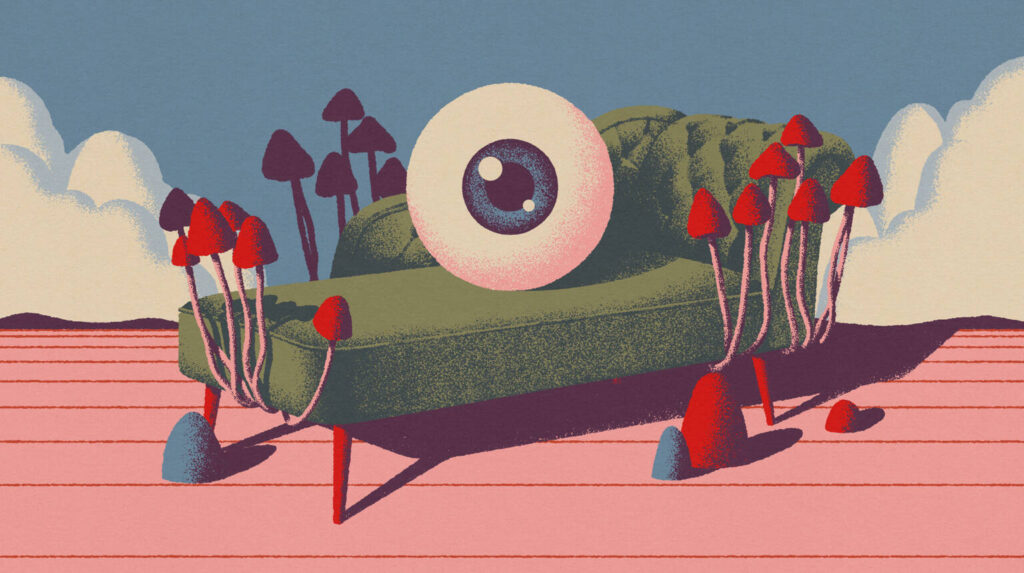
We’ve all heard that psychedelics can reduce stress, but how? Psychedelics have recently been recognized as a tool that can be used to address a range of mental health problems—anything from depression and anxiety to addiction and stress disorders. In this article, we’ll explore the science behind psychedelic stress relief and give you 5 actionable tips to help you incorporate psychedelics into plans for a stress-free future. What Does Science Say About Stress and Psychedelics? Before we get into how you can use psychedelics for stress relief, you’ll probably want a little assurance that it works. So, what exactly have researchers found when looking at psychedelics and stress? We can’t talk about psychedelics and stress without mentioning PTSD. In any given year, around 8 million adults are suffering from post-traumatic stress disorder. This includes a high number of veterans, a significant number of females who have survived sexual assault/abuse, and individuals of all races, genders, and ages who have experienced an accident or disaster. Traditional therapies for PTSD typically include antipsychotic medications (like risperidone or olanzapine) or antidepressants (including Prozac, Paxil, or Zoloft). Though these medications work for some individuals, in most cases, they fall short. Even if these methods do lead to symptom management, the intolerable side effects end up being just as bad—if not worse—than the effects of PTSD itself. It’s easy to see why doctors and researchers have looked to psychedelics as an attractive alternative. Several different psychedelics are currently being studied for the treatment of PTSD. In many cases, psychedelics work to increase one’s capacity for emotional and cognitive processing—allowing them to work through their traumatic event—and do so by diminishing arousal and feelings of fear. So what does this look like? Sustained reduction of symptoms of PTSD with MDMA, a temporary reduction of symptoms with ketamine, and an improvement in symptoms with cannabis (specifically, 5 grams THC). When it comes to MDMA, studies are extremely promising—so much so that the FDA is fast-tracking the process towards its approval to be used in therapy for PTSD patients. In one study, 83% of participants (n = 20) positively responded to MDMA, and improvements were sustained over time. The ironic nature of a popular club drug being used medically is just as ironic as the way by which MDMA works to address symptoms of PTSD. MDMA (ecstasy) actually triggers the stress hormones noradrenaline/norepinephrine and cortisol. By doing so, it also activates the emotional learning required to reduce fear and stress in the long-term and also makes patients more receptive to psychotherapy. There are few studies with the classic, naturally-derived psychedelics (DMT, psilocybin, ayahuasca, mescaline, LSD) but ayahuasca has been proposed as a potential treatment for PTSD. In fact, ayahuasca ceremonies have been shown to provide relief of distressing symptoms associated with many mental illnesses, which may contribute to a better relationship with health care practitioners and a more optimal health outcome overall. Similarly, psilocybin has already been shown to have great promise in addressing stress associated with cancer and related existential crises. Impacting one’s entire outlook, psilocybin helps to reduce the elevated stress levels that normally accompany cancer treatments and patients with terminal illnesses. Working in a similar manner, the mystical experiences associated with psilocybin use are thought to produce “inverse PTSD-like effects.” These are understood to produce lasting changes in the brain, and subsequent behavior allows an individual to examine traumatic events and process them in a healthy way—which leads to sustained mental health benefits. Research into LSD and PTSD was banned in 1966, so LSD hasn’t been studied thoroughly for its potential to reduce symptoms of stress (in some cases stress is actually elevated). And because recent studies have yet to catch up for time lost during prohibition, we must rely on anecdotal evidence, some of which suggest that LSD use may help one uncover the true cause of stress and related symptoms. Unlike traditional medications that target symptoms, psychedelics help with stress because they target the root cause. Psychedelics help address the underlying causes of stress by rewiring the subconscious brain, shifting perspectives, correcting archetypal imbalances, releasing and healing trauma, and even by fostering a relationship with God or spirit. Unlike antidepressants or antipsychotics, which only treat symptoms and chemical imbalances, psychedelic use can foster long-term healing—without all of the awful side effects. So, What Are The 5 Tips for Using Psychedelics for Stress Relief? Consider Your Intention If you’re reading this article, it’s likely that you’ve experienced stress at some point in your life and are curious about how you can alleviate it. The most important thing to do right off the bat is to get to know your stress. Here are a few questions you can ask yourself: When do you find that you’re most likely to experience stress? Is there a certain time of day? A specific time of year? Are there certain situations that trigger stress more often? Have you noticed any specific conditions at work/home/in social settings that are associated with more feelings of stress? Are there certain people who you feel stress around more often? Do you find yourself feeling overwhelmed by certain people? Do you feel like you need to de-stress after engaging with specific people? It’s important to realize that there will always be an underlying cause of stress as well as triggers. No one experiences stress “just because.” And though medical and physiological factors are at play, the underlying cause will likely have something to do with a desire to control certain outcomes, a lack of self-love, a way you relate to the world, or loops created by past trauma. Knowing your stress will be the first way for you to get to the bottom of its root causes so that you can work towards alleviating it. Once you know your stress, you can create an intention around addressing it. How specific can you get about what life will look like with reduced stress? Do you want less stress at work, less stress with relationships, or do you want to better understand how to deal with stress when it arises? The better you can pinpoint your intention, the
